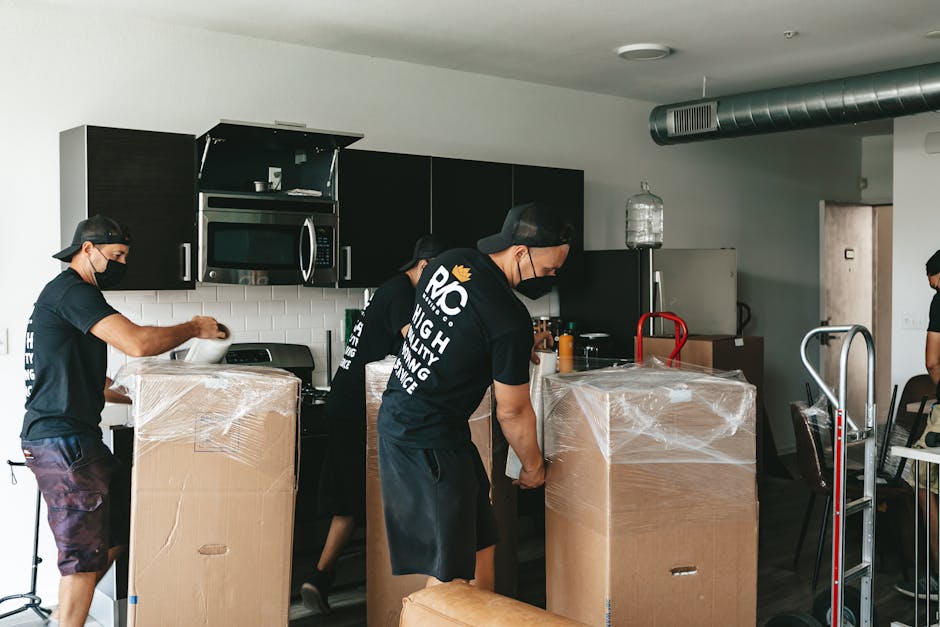
DIY moving vs hiring pros: cost, risk and results

Moving house looks simple on paper. Rent a van, rope in a mate, load the boxes, done. But once you are standing in a hallway full of awkward furniture, half-sealed boxes, and a clock ticking away, the real question lands hard: is DIY moving actually cheaper, or do professional movers give better value once you factor in risk, time, and the result at the other end?
This guide breaks down DIY moving vs hiring pros: cost, risk and results in plain English. We will look at what each option really involves, where the hidden costs sit, when professional help is worth it, and how to avoid the sort of moving-day headaches that everyone seems to remember vividly afterwards. Truth be told, the cheapest option is not always the least expensive one.
Whether you are planning a small flat move, a family home move, or a busy commercial relocation, the right choice depends on more than just the headline price. Let's get into it.
Why DIY moving vs hiring pros: cost, risk and results Matters
The move itself is only part of the story. The real decision is about what you are buying with your money: control, time, physical effort, peace of mind, and the likelihood that your belongings arrive in one piece. A DIY move can look brilliant if you only compare van hire and a few pizzas for helpers. But that picture changes fast when you add fuel, packing materials, insurance gaps, parking issues, missed work, damaged items, and the possibility of making several trips because the van was too small. That happens more often than people admit.
Hiring professionals is not just about lifting heavy things. It is about reducing friction. Good movers know how to stack safely, protect doors and floors, navigate narrow staircases, and keep the day moving when things get awkward. If you have ever watched a sofa get stuck halfway down a landing at 7:30 in the morning, you will know why this matters.
For many people, the real issue is risk. Risk to furniture, risk to walls and floors, risk to your back, and risk to your schedule. DIY can work well, but only when the move is genuinely manageable. Once the load gets bigger, the property access gets trickier, or the timeline tightens, the balance tends to shift.
There is also the result at the other end. A DIY move may save money upfront, yet leave you exhausted and still unpacking at 10pm. A professional move may cost more on the day, but give you a calmer start in your new home. That difference is hard to price until you have lived through it.
How DIY moving vs hiring pros: cost, risk and results Works
DIY moving usually means you organise the van, the boxes, the packing, the loading, the unloading, and most of the problem-solving. Sometimes friends and family help. Sometimes they help enthusiastically for twenty minutes and then become mysteriously unavailable when the fridge needs moving. To be fair, that is human nature.
Hiring pros changes the structure. Depending on the service, you may be able to book a full removal team, a man and van service, or something more specialised such as home moves, office relocation services, or packing and unpacking services. In some cases, you may only need a van and driver for a smaller load. In others, you will benefit from a full team with the equipment and experience to handle heavy, fragile, or high-value items.
The cost difference is easiest to understand in layers:
- DIY direct costs: van hire, fuel, packing materials, straps, blankets, and possibly extra help.
- DIY hidden costs: time off work, food for helpers, extra trips, accidental damage, stress, and fatigue.
- Professional service costs: labour, vehicle, equipment, planning, and usually a much smoother process.
- Professional value factors: efficiency, reduced lifting, better handling, and often more predictable timing.
The result is not just "moved" or "not moved". It is how well the move is handled from start to finish. A good moving day should feel organised, not like you are improvising a rescue mission with a kettle boiling in the background.
Key Benefits and Practical Advantages
Both options have strengths. The best choice depends on what you need most.
Benefits of DIY moving
- Lower upfront spend: If the move is small and simple, DIY can be cheaper on paper.
- Full control: You choose exactly how items are packed and loaded.
- Flexible timing: You can pack gradually, even over several evenings.
- Useful for smaller loads: A student flat, a single-room move, or a few bulky items can be manageable.
Benefits of hiring professionals
- Less physical strain: Heavy lifting is where many DIY moves go sideways.
- Better handling of awkward items: Sofas, wardrobes, appliances, and fragile pieces are usually easier with experienced movers.
- Faster turnaround: A trained team can often load and unload far more efficiently.
- Reduced damage risk: Experienced movers tend to use better packing methods and moving equipment.
- Lower mental load: You are not juggling logistics while trying to carry a mattress down the stairs.
If you are deciding between a van-only option and a fuller service, the middle ground can be very useful. For example, if you need a vehicle but not a large team, a man with van arrangement can suit smaller household moves or quick furniture transfers. For larger or more delicate jobs, a broader removal setup may be worth the extra spend.
A practical point often overlooked: better results do not always mean more luxury. Sometimes the "result" you want is simply to finish the day with your back intact and no smashed lamp in sight. Fair enough, really.
Who This Is For and When It Makes Sense
DIY moving makes sense when the job is genuinely compact, the access is simple, and you have reliable help. Think one-bedroom flats, low-value furniture, short distances, and a day when nothing else is pressing. If you already have boxes packed, can carry the heavier items safely, and can park near both properties, DIY may be perfectly reasonable.
Hiring pros makes more sense when the move is bigger, tighter, or more stressful than it first appears. That includes family homes, long-distance moves, expensive furniture, narrow staircases, limited parking, or a moving date that cannot slip. If you are moving a business, the case for professional support becomes even stronger because downtime, equipment handling, and schedule control matter so much. Services such as commercial moves and office relocation services are built around those pressures.
It also makes sense to hire professionals if:
- you do not have enough lifting help;
- you are moving large appliances or fragile items;
- you need the job done in one clear window;
- you are already stretched thin with work, childcare, or deadlines;
- you want less chance of accidental damage.
And yes, sometimes the answer is simple: you could do it yourself, but you probably do not want the stress. That counts for something.
Step-by-Step Guidance
If you are still undecided, a structured comparison is the best way to choose. Here is a practical way to work through it.
1. List everything that is actually moving
Write down the furniture, boxes, fragile items, appliances, and anything awkward like mirrors or plants. Be honest. People tend to underestimate this part and then wonder why the van looks full before the kettle has even gone in.
2. Measure the access at both properties
Check stairwells, lifts, hallways, driveway width, parking restrictions, and door clearances. A move that seems simple can become messy if there is nowhere sensible to park or the only access is a long carry from the road.
3. Estimate the real DIY cost
Include van hire, fuel, boxes, tape, bubble wrap, blankets, straps, food, possible congestion or parking charges, and time off work. If you are asking friends to help, be realistic about how much of their day you are taking.
4. Compare that to a professional quote
Look at what is included. Does the quote cover loading and unloading? Is it for a single vehicle or a team? Are packing materials included? If you need a vehicle-only solution, options like removal truck hire or a moving truck may be relevant, depending on the size of the move.
5. Price the risk, not just the service
Ask yourself what one damaged item would cost to replace. What would a pulled muscle or a missed workday mean in practice? Sometimes the cheapest move becomes expensive very quickly.
6. Decide based on pressure, not pride
There is a bit of ego wrapped up in moving decisions. We all like to think we can handle a lot. But the sensible choice is the one that fits the day you are actually having, not the superhero version in your head.
7. Build a simple moving plan
Whatever route you choose, sort packing early, label boxes by room, keep essentials separate, and protect floors and corners where possible. If you hire help, ask about additional support such as packing or specialist handling.
Expert Tips for Better Results
After enough moves, a few patterns become obvious. The moves that go well are not the ones with the biggest budgets. They are the ones with the cleanest plan.
- Start with the awkward items: Sofas, wardrobes, and appliances dictate the pace of a move.
- Use sturdy boxes of similar sizes: They stack better and waste less space.
- Keep essentials separate: Kettle, chargers, documents, toiletries, and a change of clothes should not disappear into a random box.
- Label by room and priority: "Kitchen - first night" is far more helpful than "misc."
- Protect vulnerable surfaces: Blankets, wrap, and corner protection can save a lot of grief.
- Check payment and booking details early: Good planning reduces awkward surprises on the day. If you are reviewing service terms, the company's payment and security information and terms and conditions are worth reading before you commit.
One small but important tip: keep tools in a visible, separate bag. Screws, Allen keys, and shelf brackets always seem to vanish at exactly the wrong moment. Strange, that.
If you are leaning towards professional help, ask what is included around insurance, handling, and safety. A responsible provider should be clear about how items are moved and what happens if something goes wrong. That clarity matters more than a polished sales pitch.
Common Mistakes to Avoid
Most moving-day problems are preventable. The trick is spotting them before the van arrives.
- Choosing DIY purely because it looks cheaper: Hidden costs often wipe out the savings.
- Booking the wrong size van: Too small means extra journeys and extra stress.
- Underestimating lifting difficulty: A heavy fridge is not just "a bit awkward". It is a hazard.
- Leaving packing until the last night: Rushed packing leads to broken items and lost essentials.
- Not checking parking and access: This can turn a smooth plan into a long, annoying carry.
- Failing to protect furniture: Scratched corners and torn fabric are common DIY regrets.
- Ignoring insurance or liability questions: Never assume your items are covered.
- Overloading helpers: Friends are helpful. Injured friends, less so.
Another common mistake is assuming every move fits the same model. A small local move and a large family relocation are different jobs. Likewise, moving a home is not the same as moving stock, files, and desks from an office. The right service should match the actual task, not just the postcode.
Tools, Resources and Recommendations
You do not need a warehouse full of equipment to move well, but the right basics make a huge difference.
- Boxes: Use strong boxes in a few practical sizes.
- Packing tape: More rolls than you think. Always more.
- Labels and marker pens: Clear, bold labels save time at unloading.
- Furniture blankets and wrap: Helpful for sofas, tables, and delicate finishes.
- Trolley or sack truck: Very useful for appliances and heavy boxes.
- Straps and bungees: Good for securing loads in transit.
- Gloves and suitable footwear: Common sense, but worth saying.
For larger or more complex moves, it can be helpful to compare service types before deciding. Some readers will only need a straightforward man-and-van arrangement. Others may benefit from a fuller package that includes packing, transport, and unloading. If you want to handle the planning yourself but avoid the physical grind, a service like man and van often sits right in the middle.
If your move involves a specific item rather than an entire household, do not force it into a full-house solution. A targeted service such as furniture pick-up can be a cleaner fit for one-off pieces, especially if timing and access are straightforward.
Law, Compliance, Standards, or Best Practice
Moving is not usually a heavily regulated decision for the customer, but there are still sensible standards and best practices to think about. In the UK, you should be careful about safe lifting, safe loading, and proper handling of items that could cause injury or damage. If you hire movers, ask how they manage risk, protect property, and handle fragile or heavy items.
For business moves, the bar is a bit higher. Offices often need better planning around access, building rules, fire exits, working hours, and minimising disruption. Good business moves are coordinated with building management and organised around safe movement of equipment and documents.
Insurance is another area people often skim past. That is a mistake. You do not need to become an expert overnight, but you should understand what is covered, what is excluded, and what your responsibilities are when packing or declaring items. A company's insurance and safety information should explain these points clearly.
Best practice also includes honest communication. If a sofa needs dismantling, if a narrow stairwell is likely to be a problem, or if parking is tight, say so early. That is not fussing. It is what prevents a stressful moving day from getting worse.
Options, Methods, or Comparison Table
Here is a practical side-by-side comparison to help you judge the real differences.
| Factor | DIY move | Hire professionals |
|---|---|---|
| Upfront cost | Usually lower at first glance | Usually higher, but clearer and more inclusive |
| Hidden costs | Can be significant: fuel, time, extra trips, damage | Generally fewer hidden surprises |
| Physical effort | High | Low to moderate for the customer |
| Risk of damage | Higher if packing or lifting is rushed | Lower when the team is experienced and properly equipped |
| Time needed | Often longer, especially with multiple trips | Often faster and more structured |
| Stress level | Can climb quickly on the day | Usually easier to manage |
| Best for | Small, simple, local moves | Medium to large moves, fragile items, tight schedules |
If you are moving a business or a larger household, a broader service such as house removalists or home moves may give a better balance of speed and certainty than trying to coordinate everything yourself.
Case Study or Real-World Example
Picture a couple moving from a second-floor flat into a small terraced house. They own a bed, a sofa, a dining table, six boxes of books, a TV, and a few fragile kitchen bits. At first, DIY seems like the obvious choice. The van hire is affordable, their friends are free on Saturday morning, and the route between properties is only a short drive.
Then the details appear. The sofa is wider than the stair turn. The parking outside the flat is restricted. One helper cancels. The couple spend two evenings dismantling furniture and packing late into the night. By moving day, they are tired before the van even arrives.
Now compare that to booking professionals. The cost is higher up front, but the team brings the right equipment, lifts awkward items safely, and works methodically. The move finishes earlier, the risk of damage drops, and the couple still has energy to find the kettle and make a decent cup of tea at the new place. That may sound minor. It really is not.
In another case, a small business moving stock and desks across town might save money with DIY, only to lose a full trading day coordinating people and vehicles. In that situation, a more structured move through commercial moves is often the calmer and more sensible route.
Practical Checklist
Use this before you decide. Simple, but effective.
- Have I listed everything that needs moving?
- Do I know the true access conditions at both addresses?
- Is the load small enough for DIY without multiple exhausting trips?
- Do I have enough helpers, and are they definitely available?
- Have I included van hire, fuel, packing materials, and time off work in the cost?
- Would one damaged item or one injury make DIY a bad trade-off?
- Do I need extra help with packing or heavy items?
- Have I checked the service terms, payment details, and safety information?
- Is there parking close enough for loading and unloading?
- Do I want the cheapest option, or the least stressful result?
If you can answer those honestly, the decision usually gets much clearer.
Get a free quote today and see how much you can save.
Conclusion
DIY moving vs hiring pros: cost, risk and results is not a simple bargain hunt. It is a judgment call. DIY can absolutely work for smaller, simpler moves where you have the time, the help, and the strength to carry it through. But once the move gets bigger, the access gets tighter, or the consequences of damage become harder to swallow, professional movers often deliver better value in the real sense of the word.
The smartest move is the one that protects your time, your belongings, and your sanity. If you can save money by doing it yourself without making the day harder than it needs to be, great. If hiring pros gives you a smoother move and a better start in your new place, that is money well spent. Either way, plan early, pack carefully, and choose the option that fits the day you are actually facing.
And when the last box is in, the first mug of tea somehow tastes better. Funny how that works.
Frequently Asked Questions
Is DIY moving always cheaper than hiring professionals?
Not always. DIY usually has a lower upfront price, but once you include van hire, fuel, packing materials, extra trips, food for helpers, and potential damage, the gap can shrink quickly.
What is the biggest risk with a DIY move?
The biggest risks are injury, damage to furniture or property, and underestimating how long the move will take. Heavy lifting and awkward access are the usual trouble spots.
When is it worth paying for professional movers?
It is usually worth it when the move is larger, time-sensitive, physically demanding, or involves fragile, valuable, or bulky items. If the move is likely to be stressful, professionals often pay for themselves in peace of mind.
How do I know if a man and van service is enough?
If your move is fairly small, local, and does not require a full removals team, a man and van option can be a practical middle ground. It works best when access is straightforward and the load is manageable.
What hidden costs should I look for in a DIY move?
Watch for fuel, parking, van insurance excesses, boxes, tape, protective materials, time off work, meals for helpers, and the cost of replacing anything damaged during the move.
Do professional movers usually help with packing?
Some do, and some offer it as an additional service. If packing is one of the parts you most want to avoid, look for options such as packing and unpacking support rather than assuming it is included.
Can hiring movers reduce the chance of damage?
Yes, usually. Experienced movers tend to know how to protect furniture, load vehicles properly, and move awkward items more safely. That does not remove all risk, but it often reduces it.
What should I check before booking a moving service?
Check what is included, how payment works, what the cancellation terms are, how the company handles safety and insurance, and whether the team can handle your specific type of move.
Is it better to hire professionals for an office move?
Usually, yes. Office moves involve downtime, equipment, file handling, and often tight scheduling. A professional service helps keep disruption under control and reduces the risk of losing time on the day.
How far in advance should I decide between DIY and professionals?
As early as possible. The sooner you decide, the easier it is to book the right van or removals team, gather materials, and avoid rushed packing. Last-minute decisions often cost more and feel much harder.
What if I only need one item moved?
If it is a single item such as a sofa, wardrobe, or appliance, a targeted service can be more efficient than organising a full move. For one-off items, furniture collection or a small vehicle booking may be enough.
How do I balance cost against stress?
Ask yourself what stress is costing you in practical terms. If DIY means a full weekend of lifting, chasing helpers, and risking damage, then a higher service cost may be the better value overall. Not glamorous, but honest.
Where can I compare moving options before deciding?
You can compare the type of help you need, the size of your load, and the level of support required. If you are unsure, reviewing moving options, pricing guidance, and safety information can help you make a cleaner decision.
For a smoother move, you can also explore pricing and quotes, learn more about the company, or review the business's recycling and sustainability approach if that matters to you.