Using tail lifts and stair-climbing trolleys: pros' methods for safer moves
If you have ever watched a removal team glide a heavy sofa from a kerbside truck straight into a property without a single ugly scrape, you have seen the quiet value of Using tail lifts and stair-climbing trolleys: pros' methods. It is not glamorous. It is just one of those behind-the-scenes skills that makes a move smoother, safer, and far less stressful.
To be fair, most people only think about lifting gear once the reality of narrow stairwells, awkward corners, and bulky furniture sets in. Then the question changes fast: how do the professionals move heavy items without damage, delay, or a strained back? This guide breaks that down in plain English, with practical methods, sensible caution, and a few hard-earned lessons that anyone planning a home move, office relocation, or furniture pickup can use.
- Why it matters
- How the equipment works
- Benefits and advantages
- Who it is for
- Step-by-step guidance
- Expert tips
- Common mistakes to avoid
- Tools and resources
- Law, compliance and best practice
- Methods compared
- Real-world example
- Practical checklist
- Conclusion
- Frequently asked questions
Why Using tail lifts and stair-climbing trolleys: pros' methods Matters
Moves are rarely difficult because of one single heavy item. It is usually the combination: a washing machine, a wardrobe, a marble-topped table, maybe a boxy office printer that feels much heavier than it should. Add steps, a tight landing, a wet pavement, or a building with no lift, and suddenly the job becomes a planning exercise as much as a lifting exercise.
This is where proper moving equipment earns its keep. A tail lift helps transfer loads between ground level and the van bed with less manual strain. A stair-climbing trolley helps move loads up or down stairs in a controlled way. Used well, these tools reduce risk and speed up the whole operation. Used badly, they can create new problems. Slightly dramatic? Maybe. But only slightly.
Professional movers do not just rely on strength. They use a method. That means reading the building, checking the access, matching the item to the right tool, and deciding whether the move should be split into smaller runs. This is why services such as man with van support or a bigger vehicle like a moving truck can make a very real difference when access is awkward.
There is also a trust element. Customers want their items to arrive intact. Teams want to finish the day without preventable injuries or damaged walls. So the method matters. A lot more than people think, honestly.
How Using tail lifts and stair-climbing trolleys: pros' methods Works
At a basic level, the process is simple: lift, secure, move, unload. In practice, pros break it into smaller decisions before anything leaves the property.
Tail lifts in plain terms
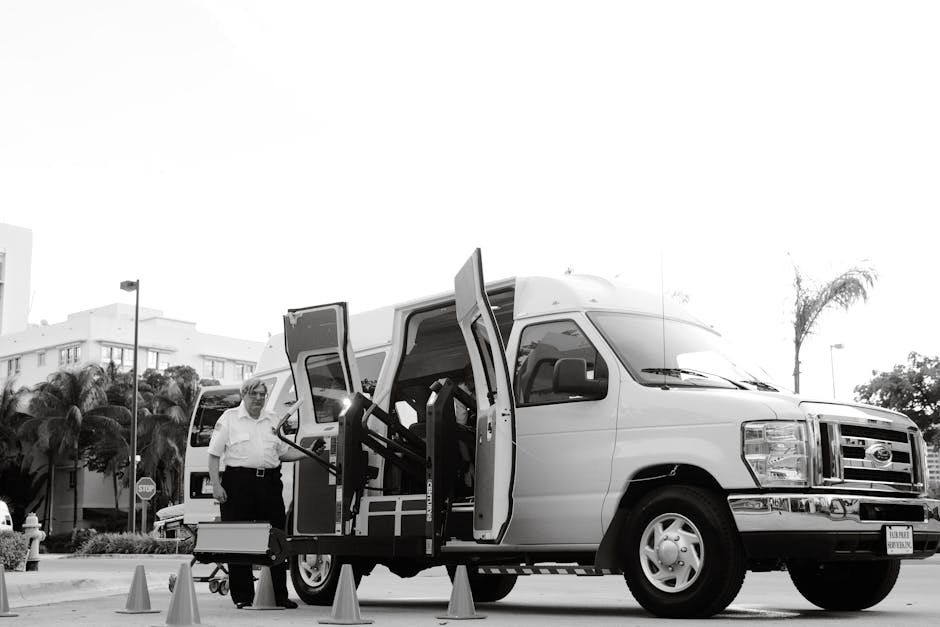
A tail lift is a platform attached to the back of a vehicle that raises and lowers goods between the ground and the van. It is especially useful for heavier, boxed, or wheeled items that would otherwise need to be carried up a ramp or manually lifted. Professionals use it to reduce repeated lifting and to keep loads stable during transfer.
The trick is not just pressing a button. It is positioning the item properly, balancing the weight, and making sure the load stays secure while the platform moves. That sounds obvious. Yet the difference between a smooth transfer and a wobble often comes down to a few seconds of proper setup.
Stair-climbing trolleys in practice
Stair-climbing trolleys are designed to help move loads over steps by using tracked wheels, rotating wheel clusters, or a frame that shifts weight gradually. They are especially handy for white goods, filing cabinets, and heavier furniture on staircase-only jobs.
Professionals use them with patience. They do not rush the first step, because the first step decides the rhythm. Once the trolley is balanced, the operator keeps the item tilted correctly and moves steadily rather than muscling through. You will notice experienced crews pause often. That is not hesitation. It is control.
The professional workflow
Most pros follow a quiet sequence:
- Assess the item, access route, and surface conditions.
- Choose the right tool: tail lift, trolley, ramp, or manual carry.
- Protect the item and the building before moving starts.
- Transfer in short, controlled stages rather than forcing one big lift.
- Recheck balance, grip, and clearance at every turning point.
That method is what separates a professional move from a hopeful one. Hope is not a lifting strategy.
Key Benefits and Practical Advantages
The main benefits are simple, but worth spelling out clearly.
- Less manual strain: heavy lifting is reduced, which helps protect backs, shoulders, and knees.
- Faster loading and unloading: transfers are more efficient when the right equipment is ready.
- Better control: items move in a more stable, predictable way.
- Lower damage risk: fewer awkward carries mean fewer knocks to furniture, paintwork, and stair rails.
- Better access for tricky properties: tall flats, basements, tight terraces, and buildings without lifts become more manageable.
- More professional presentation: a tidy, well-run move builds confidence immediately.
There is also a hidden benefit that people sometimes miss: these tools allow the job to be planned properly. Once the team knows a tail lift or stair-climber will be used, they can organise loading order, packing approach, and vehicle choice more intelligently. That is especially useful for home moves and office relocation services, where time and access can be just as important as the items themselves.
For larger or multi-stop jobs, equipment choice can also affect which vehicle is appropriate. A crew arranging removal truck hire may plan the load around the access available at each property. It sounds mundane. It is not. It is the bit that keeps the day on track.
Who This Is For and When It Makes Sense
This approach is not only for huge moves. In fact, it is often most useful when the property is a bit awkward, the item is unusually heavy, or the access route has one irritating obstacle after another.
It makes sense for:
- people moving between flats with stairs and no lift
- families with bulky furniture or appliances
- offices relocating filing units, printers, and IT cabinets
- landlords arranging furniture pickup or end-of-tenancy clearances
- students or renters dealing with tight staircases in older buildings
- small businesses needing fast, practical logistics on a budget
A lot of customers first come across these methods when they book a man and van service and realise the job is not just about transport. It is about how the load gets to the van in the first place. Sometimes a smaller service is the right fit; sometimes the access plan matters more than the size of the job. Both things can be true.
If a move includes several large items and a narrow staircase, using a stair-climbing trolley can be a smarter choice than asking four people to carry a wardrobe by hand. On the other hand, if the item is fragile, unstable, or unusually shaped, professionals may decide that a different technique is safer. That judgment call is part of the craft.
Step-by-Step Guidance
Below is a practical version of how experienced movers tend to approach the job. Not every move follows the same sequence, but this is a solid working pattern.
1. Inspect the property and the item
Before moving anything, check dimensions, weight, handles, feet, wheels, and any weak points. Look at stair width, handrails, landings, turns, and overhead clearance. A three-minute look can save thirty minutes of faffing later.
2. Decide whether the item should be emptied
Drawers, shelves, and removable parts should usually be emptied or detached where safe to do so. A filled cabinet behaves differently on a trolley than an empty one. It may sound obvious, but in the rush of moving day, obvious gets forgotten.
3. Protect the route
Professional crews will often use floor protection, door covers, blankets, or edge guards where needed. This is especially important on shared stairwells or in smart properties where scuffed paintwork would cause an argument nobody needs.
4. Match the tool to the item
Tail lifts are suited to transferring goods between ground and vehicle. Stair-climbing trolleys are ideal for stair routes. Some items may still need a team carry, especially if they are fragile, awkward, or too wide for the route. The right tool is the one that reduces risk, not the one that looks clever.
5. Keep weight balanced and the route clear
This is the heart of the method. The item should remain secure, the operator should have a stable stance, and nobody else should crowd the lift path. One distracted step is all it takes for the whole thing to go sideways, literally sometimes.
6. Move in controlled stages
On stairs, pros move slowly and communicate constantly. On a tail lift, they confirm the platform is stable before moving the load. There is no prize for speed if the item arrives scratched or the crew ends up exhausted before the day is half done.
7. Recheck at the destination
Once the item arrives, it needs to be set down carefully, checked for damage, and positioned safely. This is especially useful for heavy furniture, appliances, and office equipment that must be installed exactly where the customer wants it.
Expert Tips for Better Results
Here is where the pros tend to separate themselves from the rest.
- Think about the angle, not just the weight. A light item can still be awkward if its centre of gravity is poor.
- Use the shortest safe route. Fewer turns usually mean fewer chances to bump a wall or rail.
- Communicate clearly. Simple commands work best. No one wants a running commentary while carrying a fridge up stairs.
- Pad before you move. Once the item starts moving, there is no easy chance to fix a missing corner protector.
- Watch for wet surfaces. A damp pavement or entrance mat can turn a routine transfer into a slippery little nuisance.
- Plan for the final metre. That last step into the hallway or threshold is often the trickiest part.
One useful habit is to stop and reset if anything feels off. A lot of avoidable accidents happen because somebody thinks, "We're nearly there, let's just get it done." Nearly there is not the same as safely there.
If you are organising a broader relocation, services like packing and unpacking services can also help reduce awkward handling at both ends. Less loose clutter means fewer trips, fewer chances to misjudge a grip, and less time spent hunting for screws in a box marked "misc."
Common Mistakes to Avoid
People usually do not get into trouble because they know nothing. They get into trouble because they rush, overestimate, or assume the equipment will compensate for poor planning.
- Using the wrong tool for the item: a stair-climber is helpful, but not if the item is too wide or unstable.
- Ignoring route checks: low ceilings, tight bends, and narrow landings are easy to overlook.
- Overloading the trolley or lift: a practical weight limit matters, even if the item feels "manageable."
- Skipping protection: the item may survive, but the walls and bannisters might not.
- Poor communication: too many voices, or none at all, both create confusion.
- Not securing drawers and doors: small movement becomes big movement when a load tips.
- Assuming every stair set is the same: old properties have a habit of surprising people.
There is also a common psychological mistake: underestimating the job because the item looks straightforward on paper. Then you get to the top floor and realise the staircase has a turn that feels designed by someone with a grudge. Happens more than you'd think.
Tools, Resources and Recommendations
Good moving work is rarely about one hero tool. It is about a sensible kit, well maintained, and chosen for the actual situation.
| Tool or support | Best use | Why pros like it |
|---|---|---|
| Tail lift | Moving goods between ground level and vehicle | Reduces heavy lifting and gives a stable loading point |
| Stair-climbing trolley | Carrying heavy items up or down stairs | Improves control on staircases and tight access routes |
| Removal blankets and wraps | Protecting furniture and surfaces | Helps prevent scratches, chips, and scuffs |
| Straps and securing equipment | Stabilising loads during transport | Keeps the item steady and safer in transit |
| Floor and wall protection | Protecting the building during loading | Useful in communal hallways and refurbished interiors |
If you are deciding whether to use a service, look for clear communication about access, vehicle choice, and insurance approach. The details matter. A provider that asks about stair count, parking, item sizes, and floor level is generally doing the right kind of thinking.
You can also review practical information such as insurance and safety guidance, which is worth reading before any move involving heavy or fragile items. For customers comparing costs, pricing and quotes can help set expectations without guessing. And if your move involves mixed household waste or unwanted furniture, the company's recycling and sustainability approach may be relevant too.
Law, Compliance, Standards, or Best Practice
For moving work in the UK, the practical standard is straightforward: manage risk sensibly, train people properly, and use equipment in line with its intended purpose. You do not need to be a compliance nerd to see why that matters. Heavy lifting, moving vehicles, and shared access areas all carry foreseeable risks.
Professional teams should think about safe manual handling, vehicle loading, site access, and public safety. In plain English, that means not overreaching, not improvising dangerously, and not assuming a piece of kit can fix poor judgment. It also means checking whether the property has restrictions on parking, access times, or shared areas, especially in busier London streets where a van can become part of the neighbourhood argument before 8 a.m.
Good practice also includes communication about items that are fragile, unusually heavy, or difficult to grip. For businesses, the same basic standard applies during commercial moves and office relocations, where timing, safety, and continuity matter. If a provider mentions health and safety policy, item assessment, and insurance basics early on, that is a good sign rather than sales fluff.
One more thing: if equipment looks worn, unstable, or poorly maintained, it should not be used. Simple as that.
Options, Methods, or Comparison Table
There is no single best method for every move. The right choice depends on the item, the access route, and the building layout. Here is a useful comparison.
| Method | Best for | Strengths | Limitations |
|---|---|---|---|
| Tail lift | Heavy items moving between van and pavement | Stable, efficient, reduces lifting strain | Needs suitable vehicle access and correct load placement |
| Stair-climbing trolley | Items moving up or down stairs | Good control on steps, less manual carrying | Not ideal for oversized or very fragile loads |
| Manual team carry | Awkward, delicate, or shape-challenged items | Flexible and adaptable | Higher physical effort and more coordination needed |
| Vehicle with ramp only | Moderate loads and straightforward access | Simple and often sufficient | Can be tiring with heavy or repeated loads |
The comparison is useful because it stops people assuming the fanciest tool is always the best. Sometimes the simplest method wins. Sometimes the cleverest-looking machine is the wrong one for the staircase. Truth be told, the good crews are the ones who know when not to use equipment.
Case Study or Real-World Example
Imagine a third-floor flat move on a rainy weekday morning. The customer has a sofa, a washing machine, a bed frame, and several boxes. The entrance is narrow, the stairwell turns halfway up, and parking is close but not generous. Not unusual. Just enough to make everyone sigh quietly.
The crew first checks the route and decides the washing machine and boxed items should go via a stair-climbing trolley, while the sofa needs a two-person carry with protection on the corners. A tail lift helps transfer the heavier packed boxes from the van without repeated bending and lifting. The team pads the hall, keeps comms short and clear, and pauses at each turn on the stairs rather than forcing the load through.
The result is a clean, controlled move with no damage to the banister and no one arriving at the last drop with jelly legs. More importantly, the customer sees the logic of the process. It feels organised. Calm, even. That feeling matters more than people admit.
For a business example, think of an office relocating filing cabinets and IT storage units. A proper loading plan, the right moving truck, and protective handling make the day faster and more predictable. That is why many teams look for structured support through a service like office relocation services rather than trying to improvise with a larger van and a few hopeful volunteers.
Practical Checklist
Use this checklist before the move starts. It is simple, but it saves headaches.
- Measure the item, including height, width, and depth.
- Check stair width, landings, turns, and ceiling clearance.
- Confirm whether a tail lift, stair-climber, ramp, or manual carry is appropriate.
- Empty drawers, shelves, and detachable parts where sensible.
- Protect floors, walls, doors, and bannisters.
- Make sure the route is clear of loose items and trip hazards.
- Confirm parking and access arrangements for the vehicle.
- Secure the load before every transfer.
- Use clear communication between everyone involved.
- Stop and reassess if anything feels unstable or awkward.
If you are booking a move rather than handling it yourself, this is also the point to think about the wider service fit. A local household move may suit house removalists, while a lighter, flexible job may work better through man and van support. Different jobs, different tools. That part is easier when someone has already thought it through for you.
Conclusion
Using tail lifts and stair-climbing trolleys well is not about making a move look impressive. It is about making it safer, calmer, and more predictable. The pros know that the right method depends on access, weight, shape, and the building itself. They also know when to slow down, when to change approach, and when to leave a stubborn item for a better plan rather than brute force.
If you remember only one thing, let it be this: good moving work is controlled work. The equipment matters, but the judgment behind it matters just as much. That is the real professional difference.
When you are ready to plan your move, compare the access, the load, and the level of help you need. A well-matched service can save you time, stress, and a lot of unnecessary lifting. And frankly, your back will thank you later.
Get a free quote today and see how much you can save.
Frequently Asked Questions
What is the main advantage of using a tail lift during a move?
The main advantage is reducing heavy manual lifting between the ground and the vehicle. That makes loading safer, quicker, and usually less tiring for the crew.
When should a stair-climbing trolley be used?
It is most useful when an item needs to travel up or down stairs and would be awkward or risky to carry by hand. Think white goods, cabinets, or dense furniture.
Are tail lifts safe for fragile items?
They can be safe if the item is properly packed, secured, and positioned correctly. For very delicate or unstable items, a different handling method may be better.
Can one person use a stair-climbing trolley alone?
Sometimes, for the right item and route, yes. But many professional moves still use two people for better control and safer coordination, especially on turns and landings.
Do tail lifts replace manual lifting entirely?
No. They reduce manual lifting, but they do not eliminate it. Items still need to be loaded, stabilised, and positioned carefully.
Is a stair-climbing trolley suitable for a sofa?
Sometimes, but not always. Sofas can be awkward because of their width, shape, and balance. A professional will judge whether a trolley, team carry, or alternative route is safer.
How do professionals protect walls and bannisters?
They use padding, floor covers, careful turning techniques, and a planned route. In shared stairwells, that protection is especially important.
Does using lifting equipment speed up a move?
Usually yes, but only when the equipment matches the item and the access route. Poorly chosen gear can slow things down, so the planning matters.
What should I tell a moving company before the job?
Give accurate details about item size, weight, stairs, lift access, parking, and any tight spaces. The more honest the information, the better the plan.
Is a tail lift better than a ramp?
Not always. A tail lift is often better for heavier items and repeated loading, while a ramp can be fine for simpler moves. The best choice depends on the load and vehicle.
What are the biggest safety risks with these methods?
The biggest risks are overloading, poor balance, slippery surfaces, awkward stair turns, and rushed handling. Most of those are preventable with sensible planning.
How do I know if I need a more specialist moving service?
If you have heavy items, difficult access, multiple floors, or a business move with time pressure, specialist support is often worth it. It is usually cheaper than dealing with damage or delays after the fact.